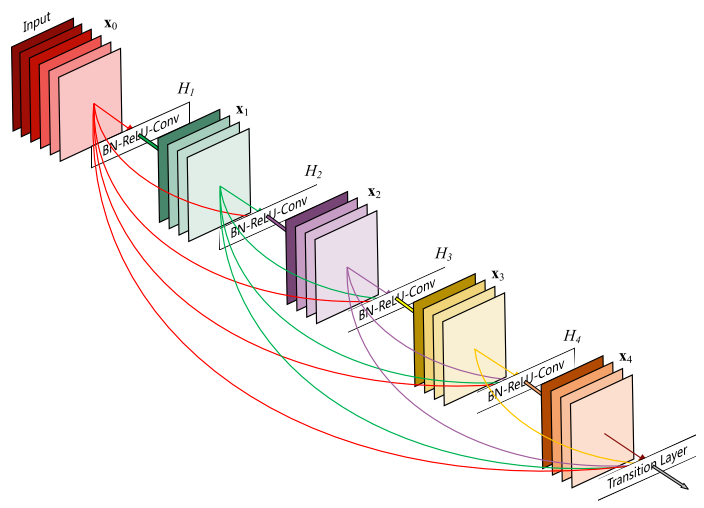
ResNet参数
    import torch
    import torchvision.models as models
    import torchvision.transforms as transforms
    from PIL import Image
    import inspect

    # 加载预训练的 ResNet-18 模型
    model = models.resnet18(weights=models.ResNet18_Weights.DEFAULT)
    model.eval()  # 设置为评估模式

    print("ResNet-18 文档:")
    print(inspect.getdoc(models.resnet18))
    print("\n" + "="*60 + "\n")

    # 分析每一层的参数量
    def analyze_resnet18_params(model):
        total_params = 0
        print(f"{'Layer Name':<25} {'Parameters':<12} {'Shape':<30} {'Description':<20}")
        print("-" * 90)

        # 卷积层1 (初始卷积)
        conv1 = model.conv1
        conv1_params = sum(p.numel() for p in conv1.parameters())
        total_params += conv1_params
        print(f"{'conv1':<25} {conv1_params:<12} {str(tuple(conv1.weight.shape)):<30} {'初始卷积层'}")

        # BN层1
        bn1 = model.bn1
        bn1_params = sum(p.numel() for p in bn1.parameters())
        total_params += bn1_params
        print(f"{'bn1':<25} {bn1_params:<12} {str(tuple(bn1.weight.shape)):<30} {'批归一化层'}")

        # 残差块
        layer_names = ['layer1', 'layer2', 'layer3', 'layer4']
        layer_descriptions = ['残差块1(2个基础块)', '残差块2(2个基础块)', '残差块3(2个基础块)', '残差块4(2个基础块)']

        for i, (layer_name, desc) in enumerate(zip(layer_names, layer_descriptions)):
            layer = getattr(model, layer_name)
            layer_params = 0

            # 每个layer包含多个BasicBlock
            for j, block in enumerate(layer):
                block_params = sum(p.numel() for p in block.parameters())
                layer_params += block_params
                total_params += block_params
                print(f"{f'{layer_name}[{j}]':<25} {block_params:<12} {'-':<30} {f'第{i+1}层第{j+1}个基础块'}")

            print(f"{f'{layer_name}_total':<25} {layer_params:<12} {'-':<30} {desc}")

        # 全连接层
        fc = model.fc
        fc_params = sum(p.numel() for p in fc.parameters())
        total_params += fc_params
        print(f"{'fc':<25} {fc_params:<12} {str(tuple(fc.weight.shape)):<30} {'全连接分类层'}")

        print("-" * 90)
        print(f"{'TOTAL':<25} {total_params:<12} {'-':<30} {'总参数量'}")

        return total_params

    # 执行分析
    total_params = analyze_resnet18_params(model)

    print("\n" + "="*60)
    print("ResNet-18 结构解释:")
    print("="*60)

    print("\n1. 网络结构概述:")
    print("   - ResNet-18 包含 18 个带权重的层(卷积层+全连接层)")
    print("   - 使用残差连接解决深层网络梯度消失问题")
    print("   - 总参数量约为 11.7M")

    print("\n2. 主要组件说明:")
    print("   - conv1: 初始卷积层,7x7卷积核,提取基础特征")
    print("   - bn1: 批归一化层,加速训练并提高稳定性")
    print("   - layer1-4: 4个残差块,每个包含2个基础块(BasicBlock)")
    print("   - 每个BasicBlock: 包含2个3x3卷积层和残差连接")
    print("   - fc: 全连接层,将特征映射到1000个分类类别")

    print("\n3. 参数量分布特点:")
    print("   - 大部分参数集中在全连接层(fc)")
    print("   - 卷积层参数相对较少但计算量大")
    print("   - 使用3x3小卷积核减少参数量")
    print("   - 残差连接不增加额外参数")

    print("\n4. 设计优势:")
    print("   - 残差结构使网络可以很深(18层)而不会梯度消失")
    print("   - 批量归一化提高训练稳定性")
    print("   - 全局平均池化减少全连接层参数")
运行结果
ResNet-18 文档:
ResNet-18 from `Deep Residual Learning for Image Recognition `__.
Args:
weights (:class:`~torchvision.models.ResNet18_Weights`, optional): The
pretrained weights to use. See
:class:`~torchvision.models.ResNet18_Weights` below for
more details, and possible values. By default, no pre-trained
weights are used.
progress (bool, optional): If True, displays a progress bar of the
download to stderr. Default is True.
**kwargs: parameters passed to the ``torchvision.models.resnet.ResNet``
base class. Please refer to the `source code
`_
for more details about this class.
.. autoclass:: torchvision.models.ResNet18_Weights
:members:
============================================================
Layer Name Parameters Shape Description
------------------------------------------------------------------------------------------
conv1 9408 (64, 3, 7, 7) 初始卷积层
bn1 128 (64,) 批归一化层
layer1[0] 73984 - 第1层第1个基础块
layer1[1] 73984 - 第1层第2个基础块
layer1_total 147968 - 残差块1(2个基础块)
layer2[0] 230144 - 第2层第1个基础块
layer2[1] 295424 - 第2层第2个基础块
layer2_total 525568 - 残差块2(2个基础块)
layer3[0] 919040 - 第3层第1个基础块
layer3[1] 1180672 - 第3层第2个基础块
layer3_total 2099712 - 残差块3(2个基础块)
layer4[0] 3673088 - 第4层第1个基础块
layer4[1] 4720640 - 第4层第2个基础块
layer4_total 8393728 - 残差块4(2个基础块)
fc 513000 (1000, 512) 全连接分类层
------------------------------------------------------------------------------------------
TOTAL 11689512 - 总参数量
============================================================
ResNet-18 结构解释:
============================================================
1. 网络结构概述:
- ResNet-18 包含 18 个带权重的层(卷积层+全连接层)
- 使用残差连接解决深层网络梯度消失问题
- 总参数量约为 11.7M
2. 主要组件说明:
- conv1: 初始卷积层,7x7卷积核,提取基础特征
- bn1: 批归一化层,加速训练并提高稳定性
- layer1-4: 4个残差块,每个包含2个基础块(BasicBlock)
- 每个BasicBlock: 包含2个3x3卷积层和残差连接
- fc: 全连接层,将特征映射到1000个分类类别
3. 参数量分布特点:
- 大部分参数集中在全连接层(fc)
- 卷积层参数相对较少但计算量大
- 使用3x3小卷积核减少参数量
- 残差连接不增加额外参数
4. 设计优势:
- 残差结构使网络可以很深(18层)而不会梯度消失
- 批量归一化提高训练稳定性
- 全局平均池化减少全连接层参数